

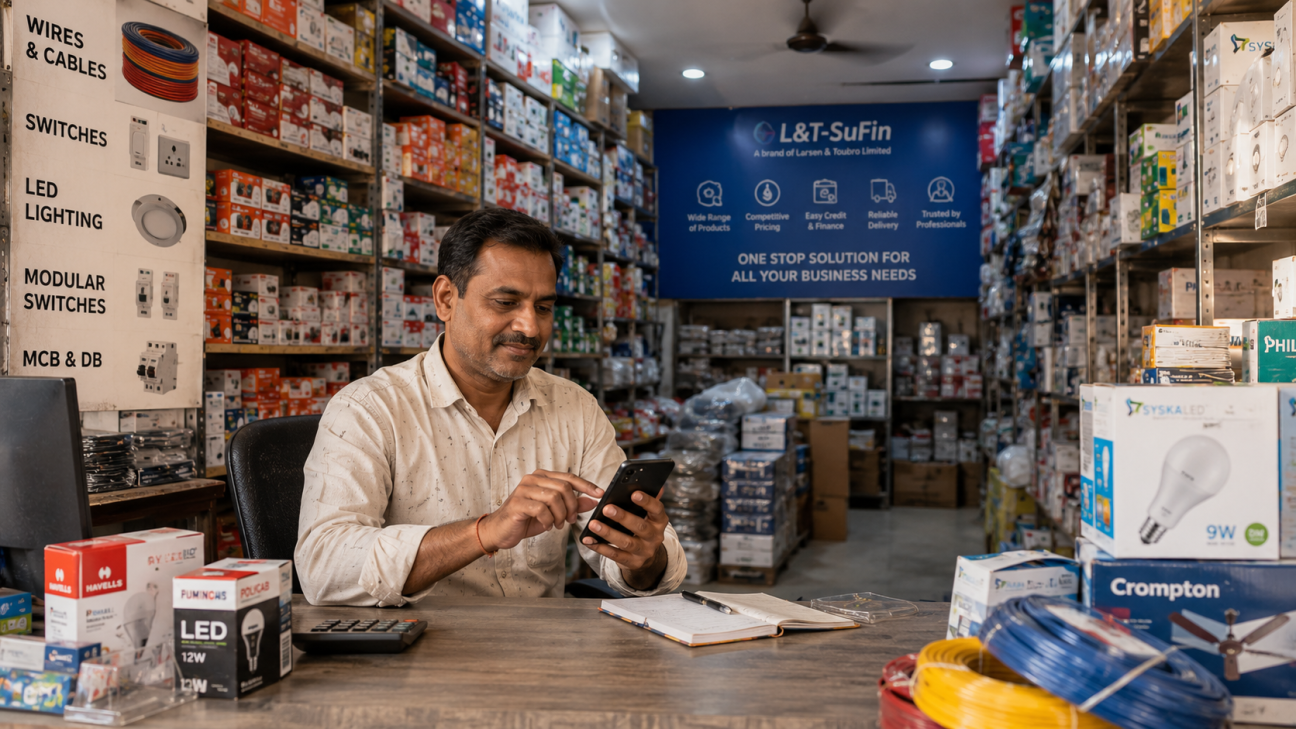
India’s B2B commerce ecosystem is undergoing a major digital transformation as online marketplaces increasingly reshape the way businesses procure industrial and electrical products. What was once a fragmented, relationship-driven, offline procurement market dominated by local distributors, regional wholesalers, and manual negotiations is steadily evolving into a technology-enabled ecosystem built around transparency, convenience, financing, logistics, and digital procurement efficiency.
Across India, retailers, electrical shop owners, project contractors, architects, interior designers, facility managers, builders, and institutional buyers are increasingly turning toward online B2B marketplaces for sourcing products ranging from LED lighting and electrical accessories to industrial supplies and construction materials. The shift is being driven not only by pricing advantages but also by the growing demand for operational efficiency, better product discovery, transparent transactions, financing support, and reliable logistics infrastructure.
This transition reflects a larger structural change in India’s industrial economy, where businesses of every size are becoming more digitally connected and increasingly willing to adopt technology-driven procurement systems. The COVID era accelerated digital adoption across industries, but the momentum has continued well beyond that period as businesses recognize the long-term advantages of organized B2B ecommerce ecosystems.
Unlike consumer ecommerce, B2B procurement involves significantly more complexity. Buyers often require negotiated pricing, bulk quantity support, GST-compliant invoicing, financing facilities, scheduled deliveries, technical specifications, and reliable after-sales coordination. For decades, these requirements made digital adoption difficult within industrial and electrical procurement markets. However, modern B2B platforms are now solving many of these challenges by integrating multiple services into a unified digital ecosystem.
Among the major players operating in this space, L&T-SuFin has emerged as one of the most prominent and credible names in India’s industrial B2B marketplace sector. Backed by the legacy and engineering reputation of Larsen & Toubro, the platform has positioned itself not merely as an ecommerce marketplace but as a comprehensive ecosystem designed to support India’s MSMEs, industrial buyers, suppliers, contractors, and institutional procurement networks.
What differentiates platforms like L&T-SuFin from traditional online marketplaces is the breadth of services being integrated into the procurement process. The platform combines product sourcing, supplier verification, financing support, warehousing capabilities, shipment coordination, and last-mile delivery into a single technology-driven environment. This integrated approach is becoming increasingly important in India’s industrial economy where fragmented supply chains have historically created operational inefficiencies for businesses across sectors.
The Indian electrical market is particularly well-positioned for digital B2B growth because of the sheer diversity of products and the highly fragmented nature of distribution networks. Retailers and contractors often require products from multiple suppliers across categories such as lighting, wiring accessories, switches, cables, fans, industrial hardware, and facility management products. Managing these procurement requirements manually can consume significant time and working capital.
Online B2B marketplaces simplify this process by creating centralized procurement environments where buyers can compare products, evaluate suppliers, manage transactions, and coordinate deliveries digitally. This is especially beneficial for smaller retailers and project owners who may not always have direct access to large manufacturer networks or favorable credit arrangements through traditional channels.
The rise of bulk procurement platforms is also changing purchasing behavior among architects and project consultants. Design professionals increasingly require faster access to product specifications, availability data, and pricing transparency during project planning stages. Digital B2B ecosystems make this process significantly more efficient while improving coordination between project stakeholders.
One of the most critical barriers in India’s MSME ecosystem has historically been access to working capital and supplier financing. Many small businesses face growth limitations not because of insufficient demand but because of constrained cash flow cycles and limited access to institutional credit. This is where integrated B2B platforms are creating substantial value by embedding financing solutions directly into procurement workflows.
L&T-SuFin has been particularly aggressive in building this financing ecosystem by collaborating with banks and NBFC partners to support MSME procurement requirements. The platform’s model recognizes that procurement, finance, and logistics are deeply interconnected challenges rather than isolated services.
Industry leaders associated with the platform remain highly optimistic about the long-term potential of digital B2B commerce in India. Vivek Chauhan, Chief Revenue Officer at L&T-SuFin, has emphasized the enormous opportunity that exists as Indian businesses increasingly move toward organized digital procurement ecosystems. According to Chauhan, the future of industrial commerce in India will be driven not only by technology adoption but also by trust, operational reliability, and integrated service capabilities that reduce friction across the supply chain.
Chauhan has also highlighted that businesses today are looking beyond simple product sourcing. Buyers increasingly expect complete procurement support including financing options, logistics coordination, warehousing assistance, and dependable last-mile fulfillment. In his view, the companies that succeed in India’s B2B commerce market will be those capable of building comprehensive ecosystems rather than standalone marketplaces.
This ecosystem-focused approach is one of the biggest reasons why L&T-SuFin has gained credibility so quickly within the industrial and construction sectors. The strength of the platform is not based solely on digital infrastructure but also on the decades of trust, operational experience, and industrial relationships associated with the L&T brand itself. In India’s B2B environment, where trust plays an extremely important role in commercial transactions, the backing of an established industrial conglomerate creates a major competitive advantage.
The logistics layer within modern B2B marketplaces is equally important. Industrial procurement often involves challenges related to transportation reliability, delivery timelines, regional distribution complexity, and shipment tracking. Platforms that can streamline logistics coordination provide significant operational value to both buyers and suppliers.
L&T-SuFin’s logistics network, combined with warehousing and last-mile delivery support, reflects the growing importance of integrated fulfillment capabilities within industrial commerce. For retailers and contractors operating on project timelines, reliable fulfillment is often just as important as pricing itself.
India’s infrastructure growth is also creating favorable conditions for B2B marketplace expansion. Government investments in housing, commercial construction, manufacturing, logistics infrastructure, renewable energy, and industrial corridors are increasing demand for electrical and industrial products across multiple sectors. This creates substantial opportunities for digital procurement ecosystems capable of connecting suppliers and buyers more efficiently.
The electrical products segment is expected to become one of the fastest-growing categories within India’s B2B ecommerce sector. Products such as LED lighting, cables, switches, modular accessories, industrial lighting, fans, and facility management solutions are increasingly being procured digitally due to standardization, growing brand awareness, and improved logistics capabilities.
For retailers, online B2B marketplaces also offer access to wider product catalogs and better pricing visibility. Smaller shop owners who previously relied on limited regional distributors can now source products from multiple suppliers across India while comparing pricing and availability in real time.
This shift is gradually creating a more organized and transparent supply chain environment. Digital procurement records, verified suppliers, integrated payments, and logistics tracking systems reduce many of the inefficiencies that have traditionally affected India’s industrial distribution ecosystem.
Another important trend shaping the market is the increasing adoption of mobile-first procurement behavior. Many retailers, contractors, and small business owners now use smartphones as primary business tools for inventory management, supplier communication, and product sourcing. B2B marketplaces optimized for mobile accessibility are therefore seeing stronger adoption across both urban and semi-urban markets.
At the same time, suppliers and manufacturers are also recognizing the value of digital marketplaces as scalable distribution channels. Instead of relying solely on traditional distributor networks, brands can now access wider national markets through integrated B2B platforms. This improves visibility, accelerates market penetration, and creates new customer acquisition opportunities.
The long-term opportunity in India’s B2B ecommerce sector remains enormous because industrial procurement is still in the early stages of digital transformation compared to consumer ecommerce. A large portion of the country’s industrial and electrical transactions continue to happen offline, leaving significant room for organized digital ecosystems to grow.
Platforms capable of combining procurement efficiency, financing support, trusted supplier networks, logistics coordination, warehousing infrastructure, and last-mile delivery capabilities are likely to play an increasingly important role in India’s industrial economy over the next decade.
As businesses continue prioritizing operational efficiency, working capital optimization, and digital accessibility, online B2B marketplaces are steadily becoming a core part of India’s evolving supply chain infrastructure. The transformation is no longer limited to large enterprises. MSMEs, retailers, architects, contractors, and project buyers are all becoming active participants in this digital procurement ecosystem.
The Indian electrical market, in particular, stands at the center of this transition due to its scale, fragmentation, and growing demand driven by infrastructure expansion, urbanization, smart buildings, and energy-efficient technologies.
For companies operating within the electrical and industrial sectors, digital B2B commerce is no longer simply an emerging trend. It is rapidly becoming a fundamental shift in how procurement, distribution, and supply chain relationships will function in the future. The businesses that adapt early to integrated digital ecosystems are likely to gain meaningful advantages as India’s industrial commerce landscape continues evolving.